London

Dreams, Breaths & Blue Light

Somerset House’s luminous lady invites us to pause and imagine.

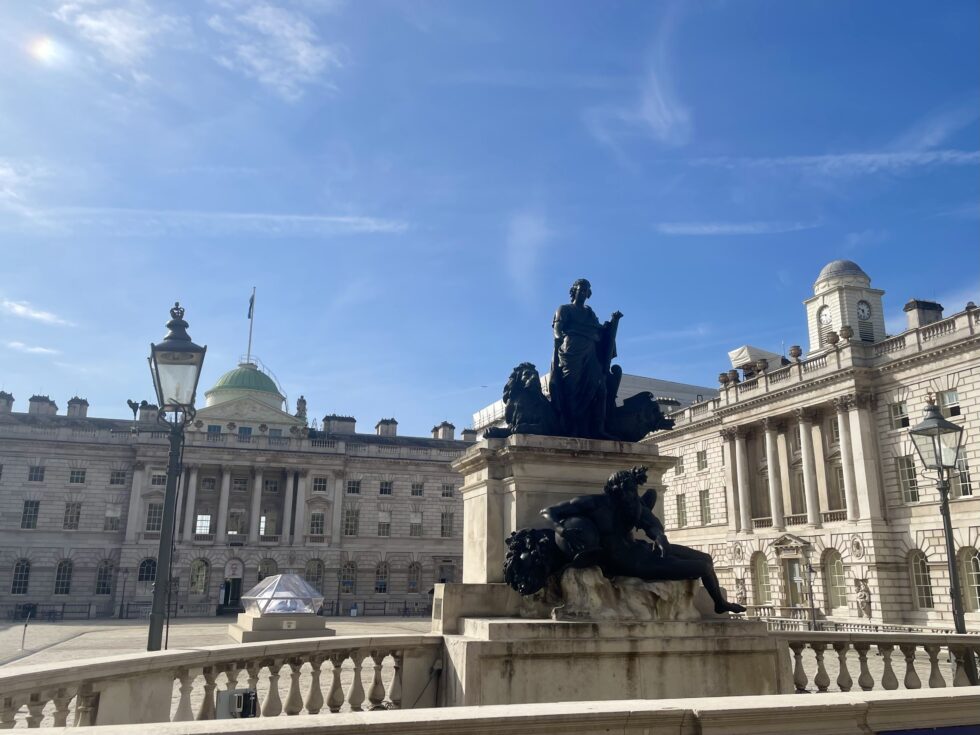
Sometimes London throws you a curveball. One minute you’re dodging black cabs and pigeons, the next you’re standing in a grand courtyard, gazing at a luminous, breathing blue lady stretched out as if caught between sleep and dream.

Hi there, lovely readers,

The G and I had just walked Adrian, our beloved host, to work. It’s 7 am, a perfect time to bask in a hazy sun and breathe the last vestiges of crisp air before the masses emerge. ‘I have something to show you that’s totally wild!’ G whispered over our post, good deed coffee. Lead on, said I. If it excites the big G, it has to be intriguing!

The Spell or The Dream

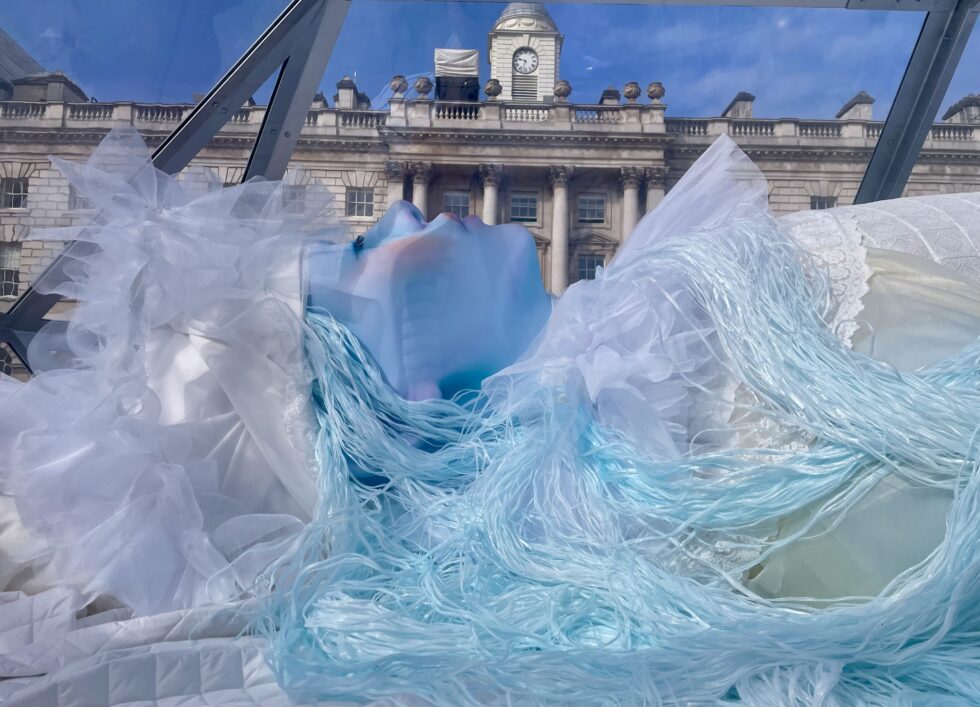
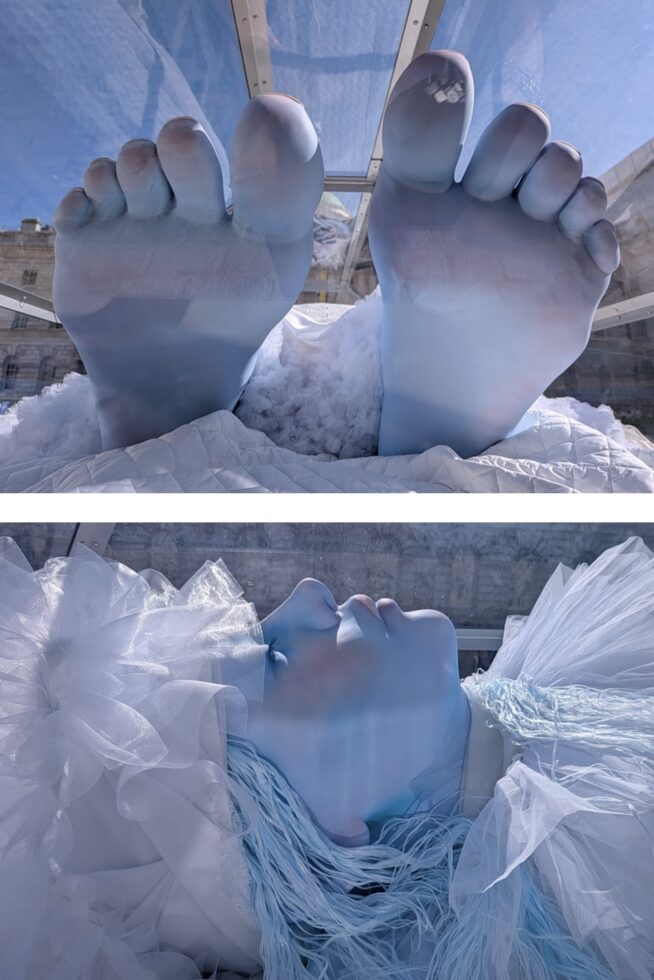
Picture it: a giant glowing figure, her chest rising and falling as though fast asleep, while the fountains pause to let you tune into her slow rhythm. Add a haunting soundscape by Maxwell Sterling, and suddenly the whole courtyard feels like it’s holding its breath.

This is The Spell or The Dream by Turner Prize-winning artist Tai Shani, and she’s taken up residence at Somerset House’s Fountain Court.
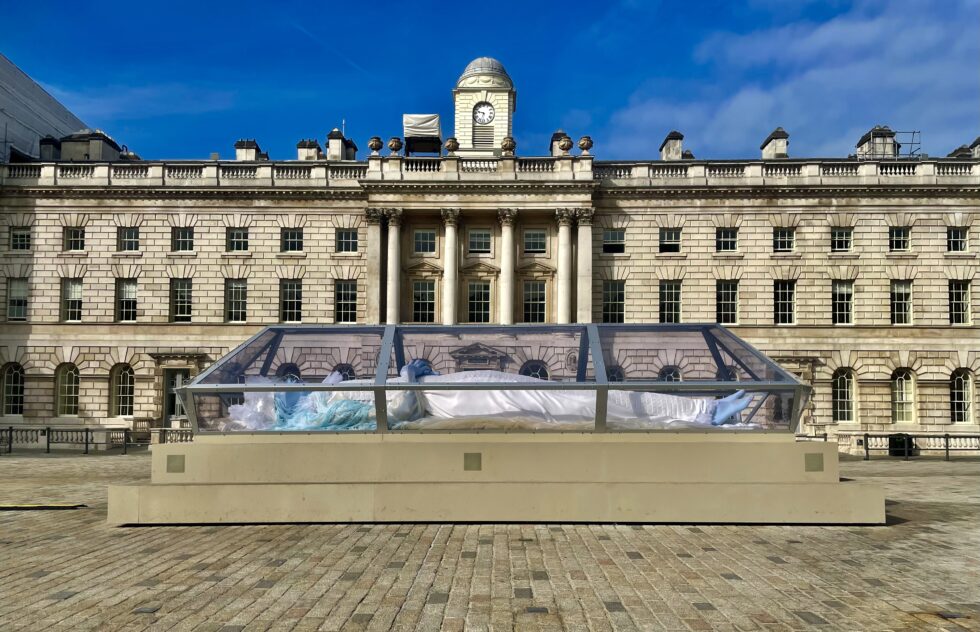
But it’s not just a sculpture – it’s a conversation. Around the installation is The Dream Radio, a 24/7 broadcast featuring artists, writers, and even musicians like Brian Eno, who share stories of dreams, catastrophes, and futures yet to be written. It’s strange and beautiful, like being invited into an intimate ecstasy party.

For me, it was the sense of that kind of intimacy that lingered. Here, in the middle of buzzing London, stood a glowing figure that made you stop, sit, and listen – to her, to the city, and maybe even to yourself. Art that reminds you to breathe? I’ll take it.
The Blue Lady
Screenshot

By now, you’ll have identified that I love a good fun fact. A little research and here they are:

Top 5 Fun Facts: The Blue Lady at Somerset House

1. She Breathes  – The luminous blue figure doesn’t just lie there; her chest rises and falls with a slow, hypnotic breath. Standing beside her, I soon found myself matching her rhythm.

2. Soundtrack to a Dream – Composer Maxwell Sterling created an ambient soundscape that surrounds her, so it feels like you’ve stepped into someone else’s dream.

3. Dream Radio – Alongside the sculpture is a 24/7 broadcast featuring people sharing stories about hope, nightmares, and futures still to come. Could call it bedtime radio for big thinkers.

4. Pause for Effect – Twice a day (12 pm & 4 pm), the courtyard fountains switch off so visitors can fully experience the sculpture and sound without watery distractions.

5. Here for a Good Time, Not a Long Time – This giant glowing lady leaves London on the 14th September. If you’re here before then, don’t miss her. She’s more than a sculpture – she’s an invitation to dream in broad daylight.

And I wonder – where will she find her next enthralled, inspired, intrigued audience?
Somerset Housen

Keys, Lanterns & Late Night Rituals

The Tower of London’s nightly Ceremony of the Keys…

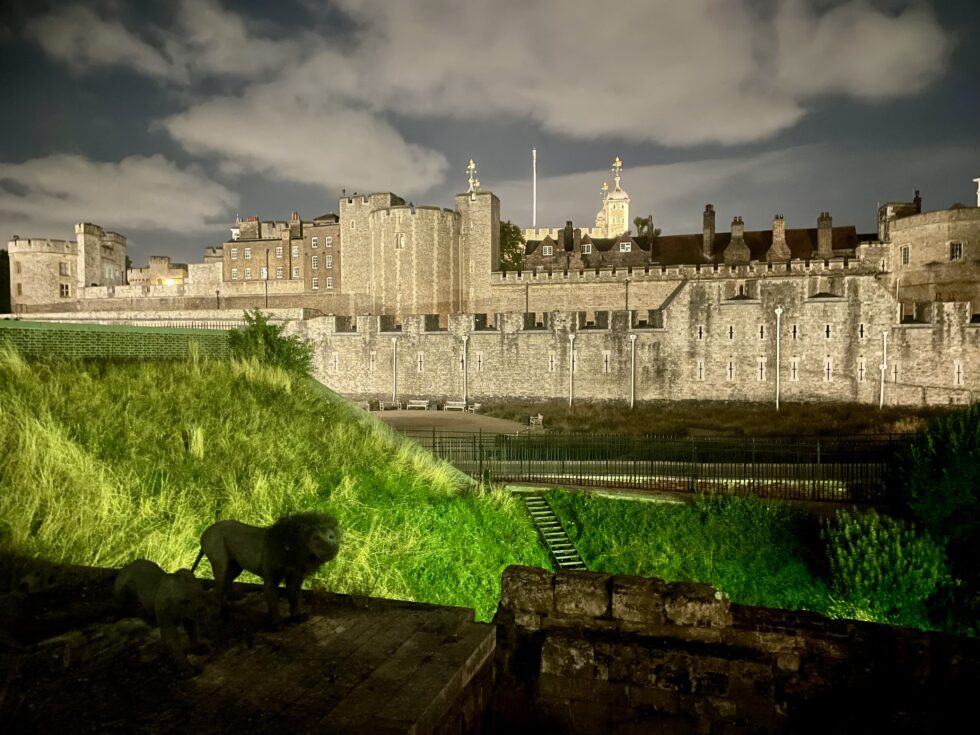
Every night at exactly 9:53 pm, the gates of the Tower of London are locked in a ritual that’s been running for nearly 700 years – the Ceremony of the Keys.

Hi there, lovely readers,

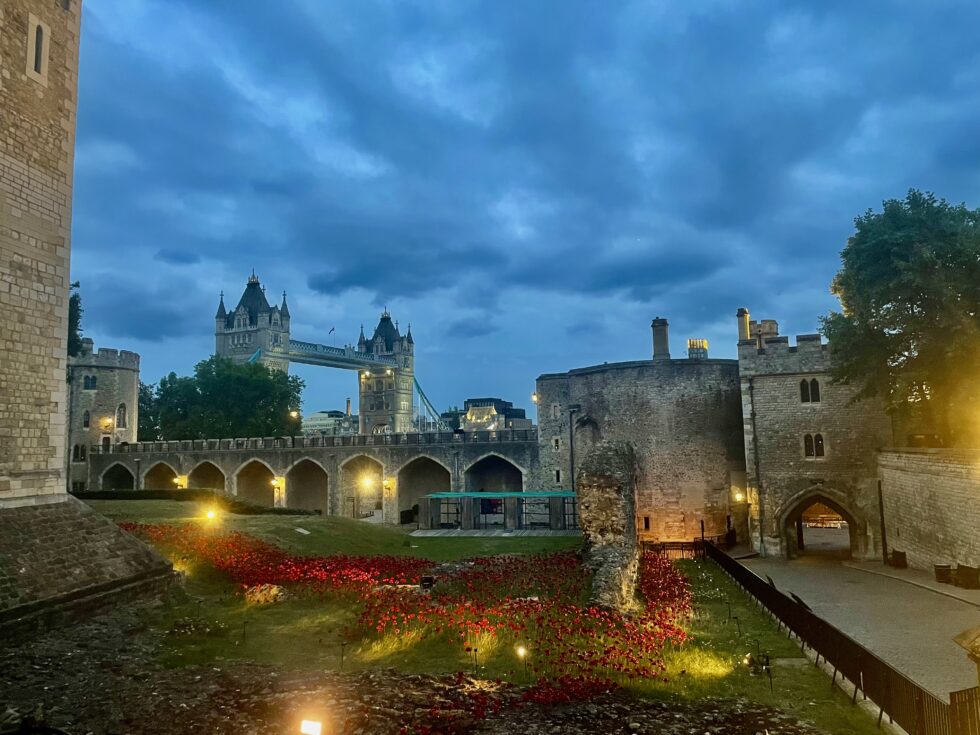
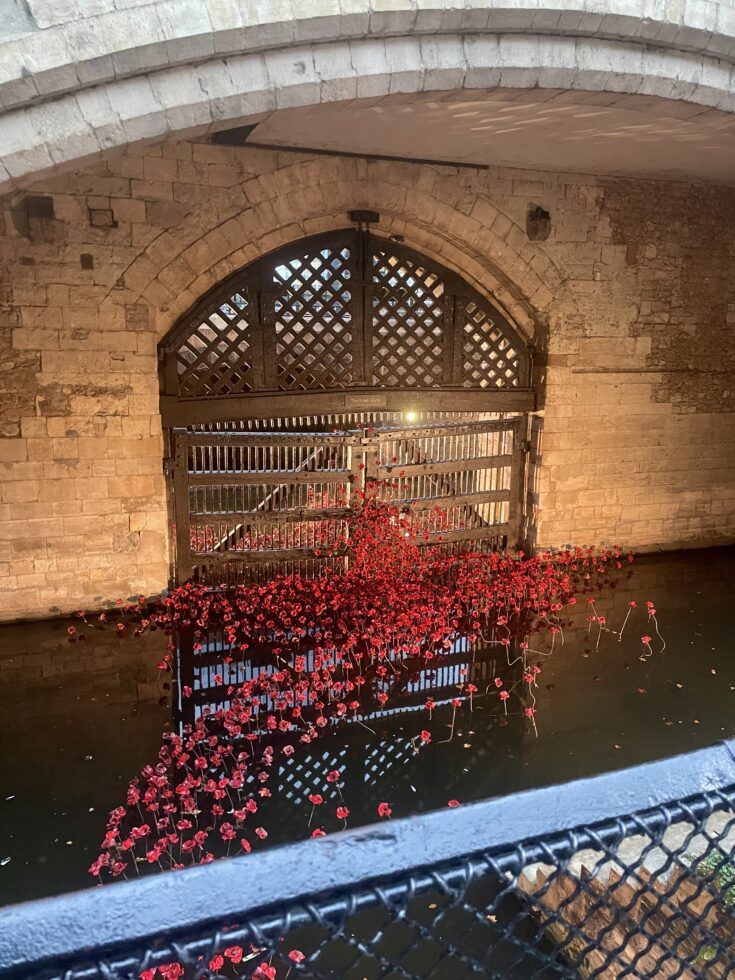
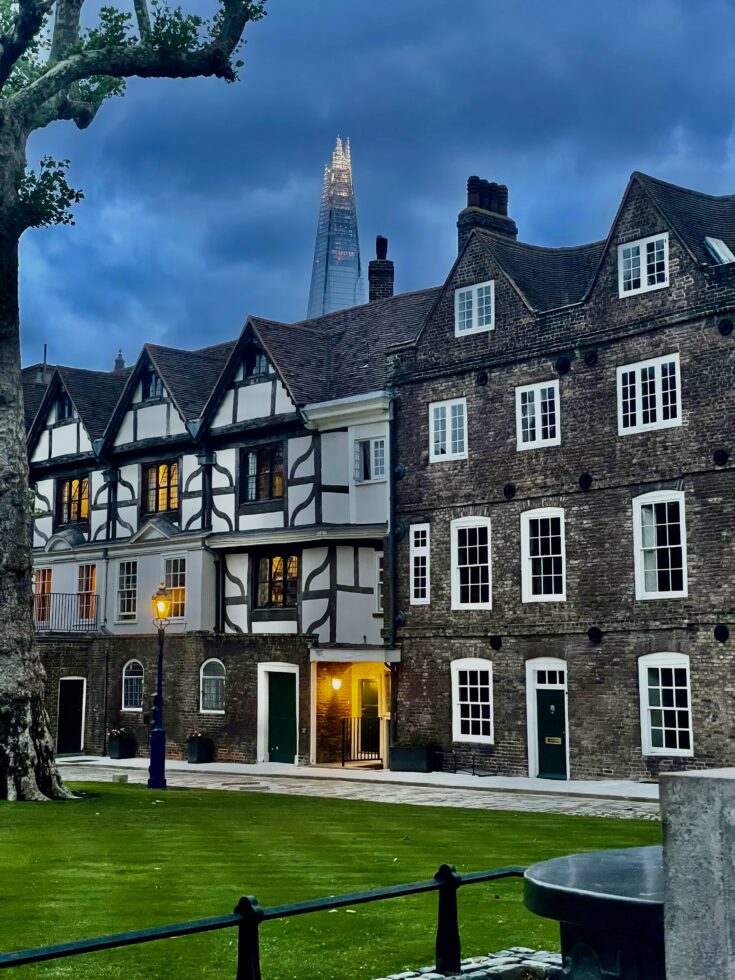
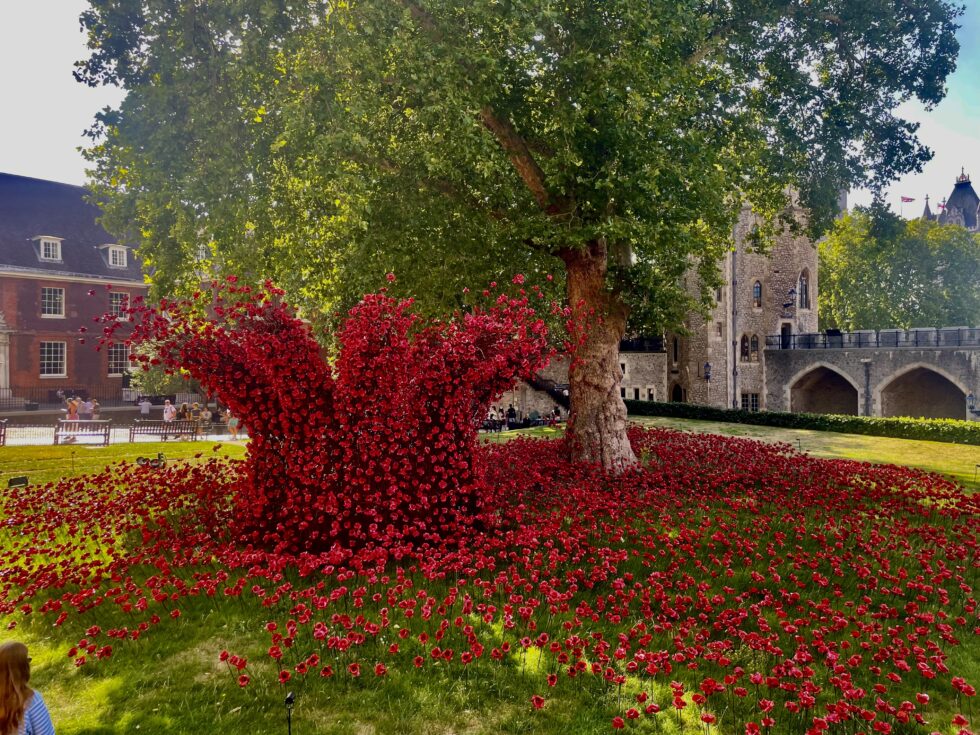
And, at precisely 7 pm, we assembled in our refinery – dress shoes essential (the boys moaning after days in sneakers!) – and reverently followed our guide over the moat, past glowing fields of poppies, the raven’s luxurious home, and into the bowels of the Tower.

Led by the Chief Yeoman Warder (yes, one of the famous Beefeaters), we were regaled with the bloody yet fascinating history of the Tower: the warders’ homes, their duties, the lavishly feathered ravens, tales of ghosts and of discovery in 1674 of the remains of two young missing princes, thought to have been murdered by Richard the III, their heritage yet to be proven until current royalty agree to DNA testing (requests declined by the late Queen and now King Charles)


Over drinks at their mess, we learned that all Yeoman Warders are retired Warrant Officers (and above) from the Armed Forces. The big G and our buddy chuffed to hear this, given they too were former Warrant Officers, and the three of us were there thanks to the request of our London host, himself the Australian Attaché to the Navy. The Yeoman Warders are part historian, part storyteller, part tourist-wrangler – with a generous dash of humour – which makes them the perfect keepers of this nightly ritual.


And then… the Keys

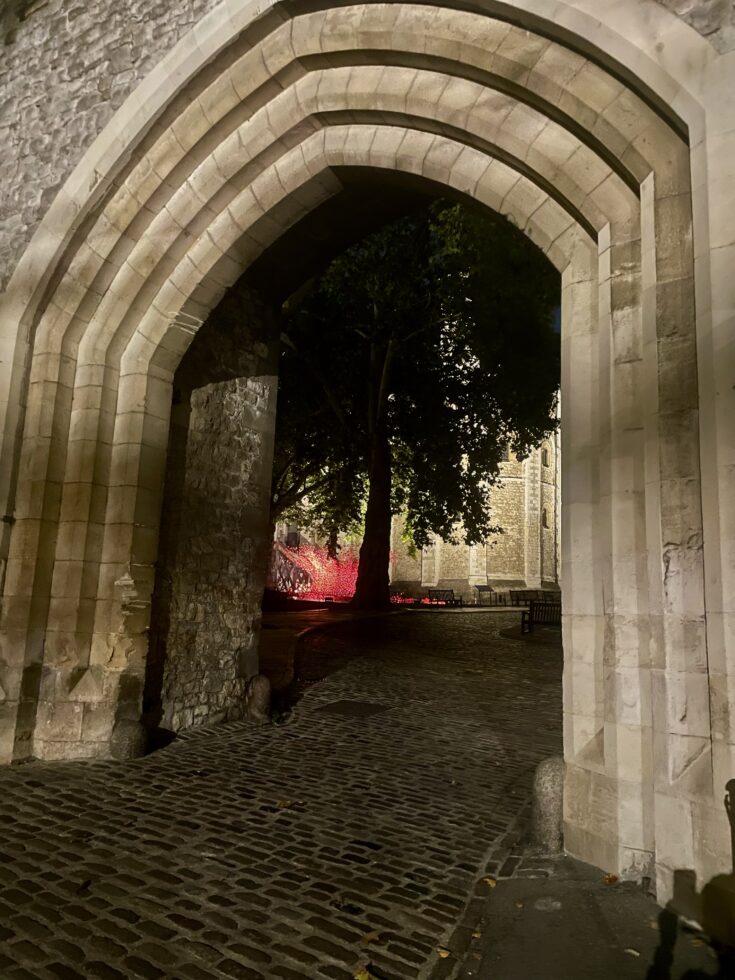
At last, lantern in one hand and the King’s Keys in the other, our Yeoman Warder strode out with his Foot Guard escort to begin the rounds. The air was electric as we filed behind until we reached the Bloody Tower archway.

“Halt! Who comes there?”
“The Keys.”
“Whose Keys?”
“King Charles’s Keys!”

And with that, the gates were locked, the keys returned to the King’s House, and the Last Post echoed through the Tower: ten minutes, a lifetime of tradition. No photos. Respect.

This ritual has been carried out without fail for centuries – interrupted just once, in 1940, when a bomb blast blew the Chief Warder clean off his feet. He picked himself up, dusted off, lantern still lit, and carried on. How’s that for the stiffest of stiff upper lips?


Top 5 Fun Facts about the Ceremony of the Keys

1. The Oldest Military Ritual in the World – It’s been performed nightly for over 700 years. Historically, crucial for protecting monarchs who resided in the Tower and preventing prisoners from escaping. While no longer a royal residence, it continues to safeguard valuable artefacts, including the Crown Jewels.

2. Boom! Carry On – Only once interrupted, in WWII, when a bomb threw the Warder off his feet. He finished anyway.

3. Military Precision – It always starts at exactly 9:53 pm. Not 9:52. Not 9:54.

4. No Latecomers – Miss your slot and that’s it – not even the King’s Keys will get you in.

5. Free, but Coveted – It costs nothing to attend, but you’ll need to apply well in advance.

After battling sunburnt, tetchy crowds by day, the Tower by night felt ethereal – shadows whispering through the cobblestones, every step echoing with centuries of history.

Lions, Lamp Posts and London Legends

Where Nelson keeps watch, lions have cat feet, and lamp posts moonlight as police stations

Hello again lovelies!

Coffee and croissant later, we’re out the gate and running again!

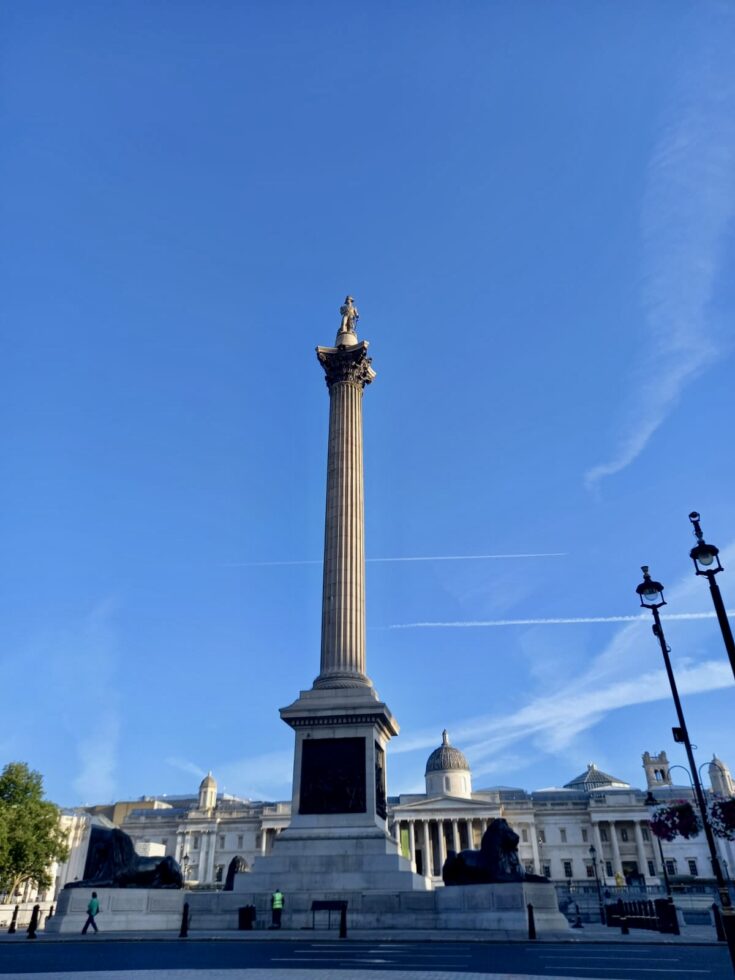
Or at least at a leisurely “holiday pace.” Today our route begins in Trafalgar Square, the city’s grand open-air living room.

Lions & Lamp Posts

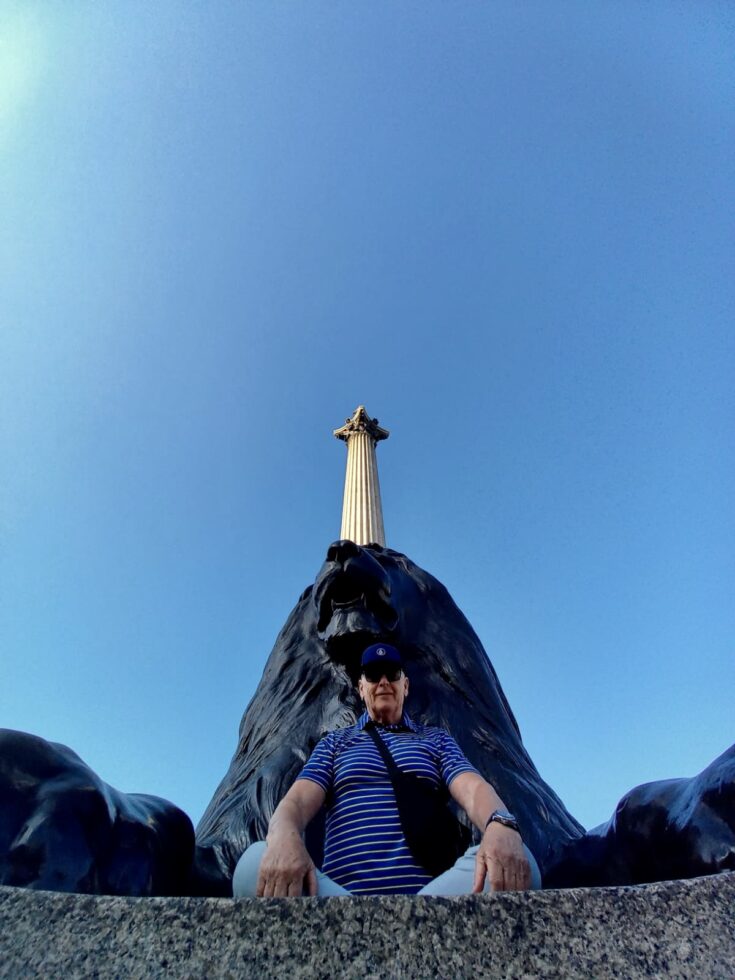
Rising 52 metres into a clear cerulean sky, Nelson’s Column dominates Trafalgar Square, a proud tribute to Admiral Horatio Nelson — considered by many the greatest of Britain’s naval heroes. His most famous victory came at the Battle of Trafalgar in 1805, when the Royal Navy defeated a combined force of 33 French and Spanish ships, destroying about 20 without losing a single vessel. Nelson himself was killed in that battle, but here in London, he watches over the city forever.

Fun Facts about Trafalgar Square:

#1: If you walk down The Mall, you’ll spot lamp posts topped with tiny galleon-like ships — nicknamed Nelson’s Fleet. They’re said to represent the ships from Trafalgar, though no one can quite agree if each one matches a real vessel.

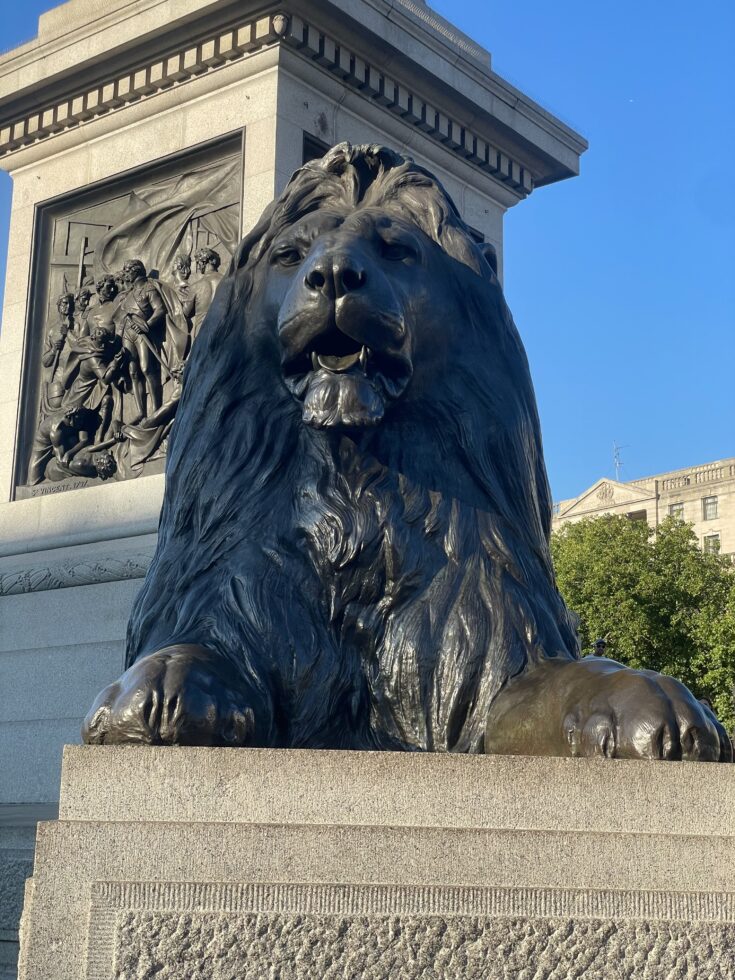
#2: The four enormous lions guarding Nelson’s Column were sculpted by Sir Edwin Landseer — but their paws are suspiciously…cat-like. That’s because the dead lion Landseer used as a model (from London Zoo) had started to decompose by the time he got to the paws, so instead he borrowed the shape from his pet cats.

#3: Cannons from the destroyed French fleet were used across London as road Bollards,  though few remain today, hows that for sticking the finger to them?

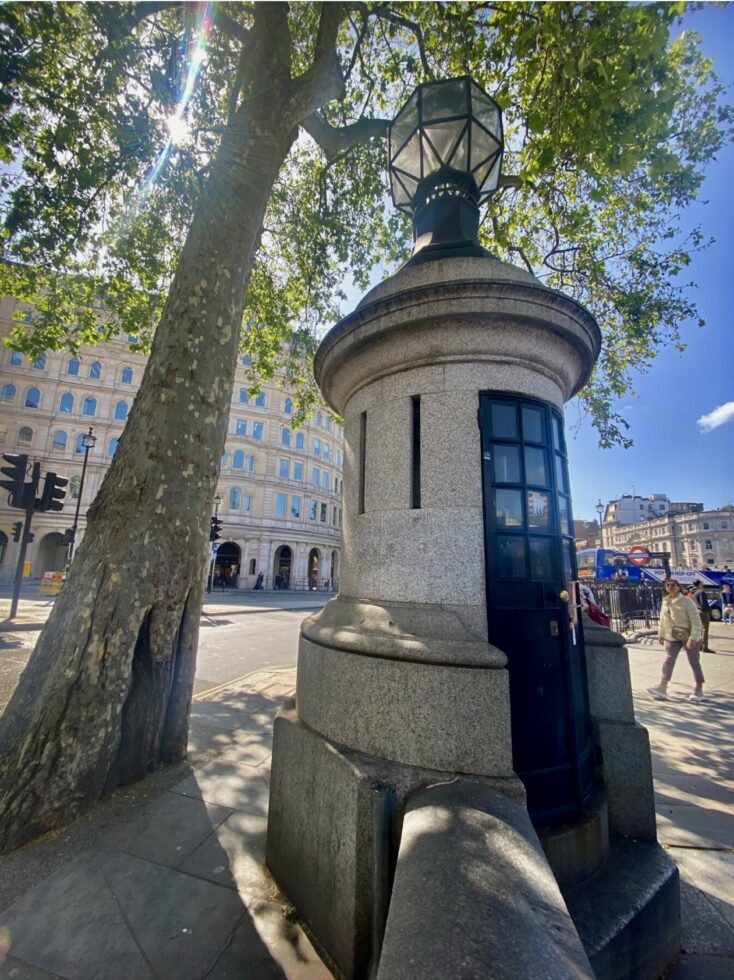
#4: There’s an unassuming lamp post hiding something unexpected — a one-person police station, built in 1928 so officers could discreetly watch over protests in Parliament Square. London loves a good secret, though it’s now a handy broom cupboard!

Screenshot

We linger in the square, imagining it lit for its annual Christmas ceremony, when Oslo gifts London a towering spruce as a thank-you for Britain’s support during WWII — a tradition since 1947.

Palaces and Pelicans

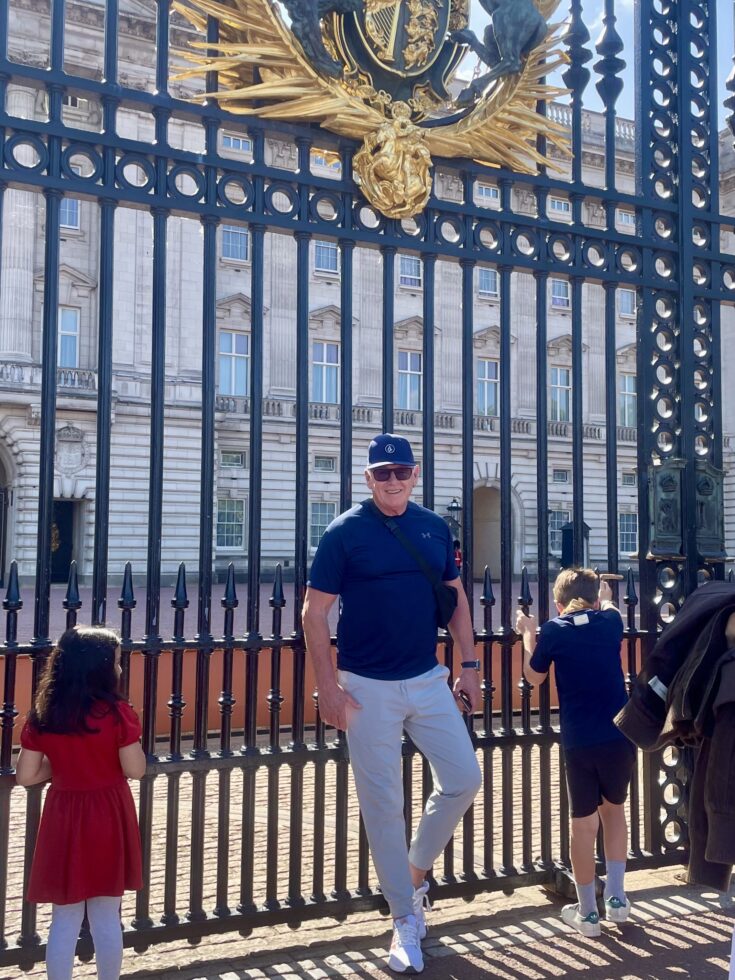
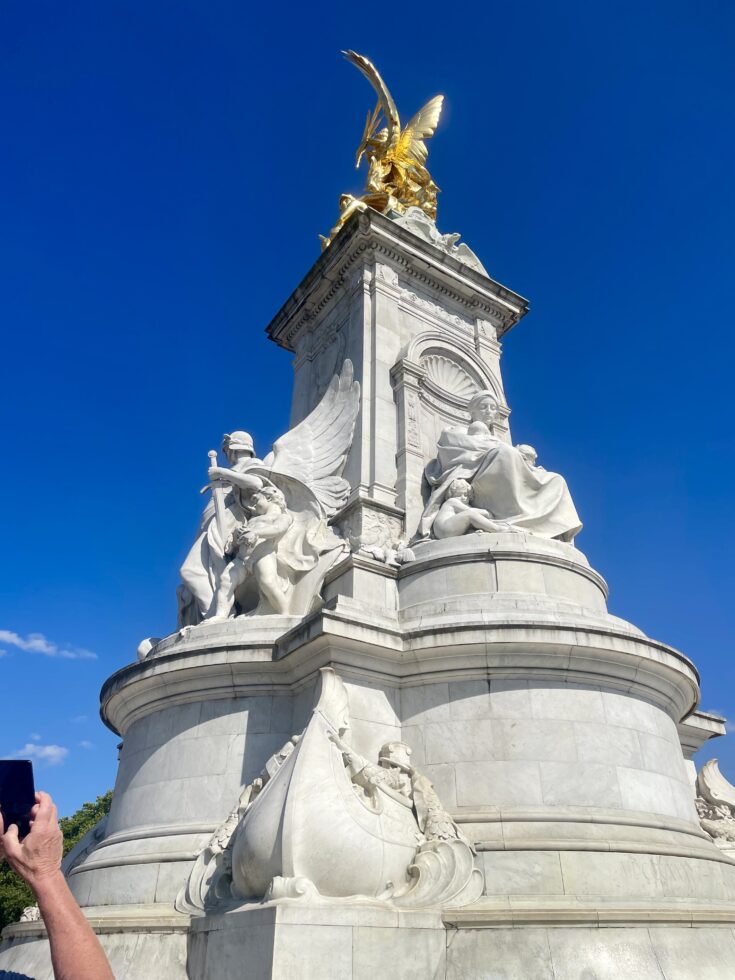
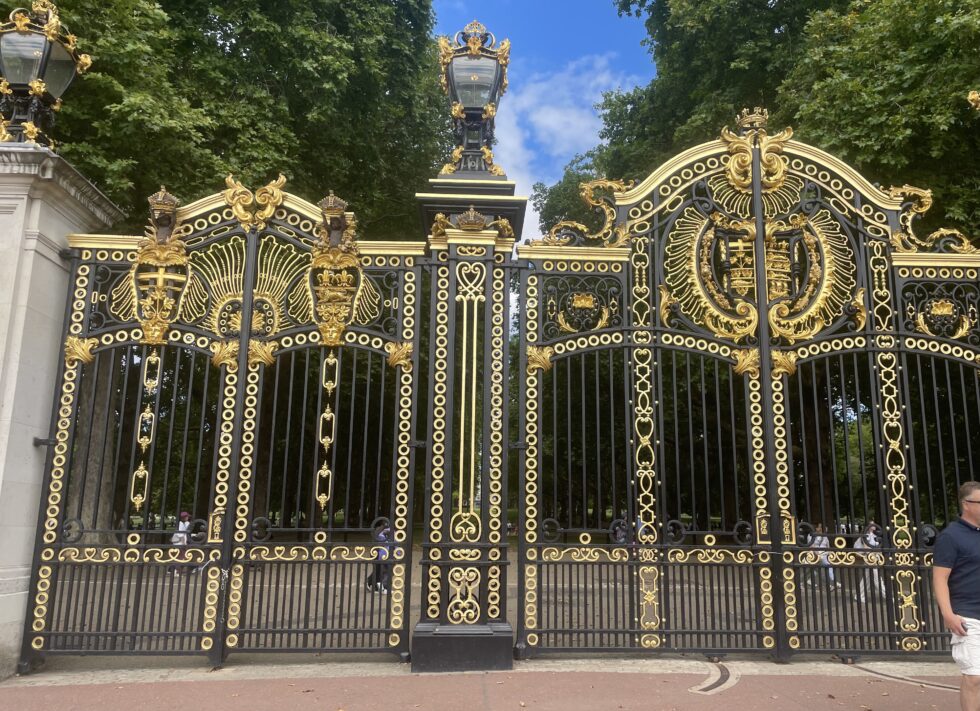
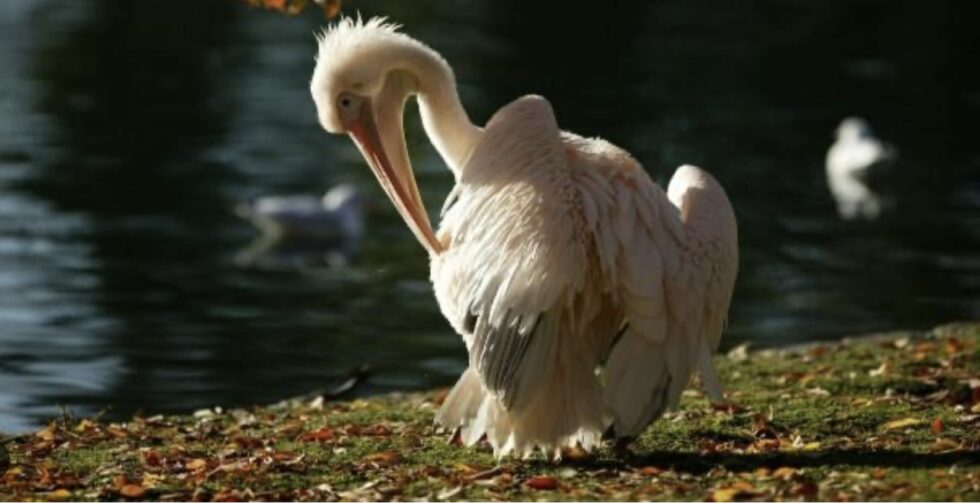
The obligatory snap in front of Buckingham Palace, where G tries not to look like a kiddy snatcher, a turn around Queen Victoria’s sparkling Statue then through the magnificent golden gates we wander into St James’s Park, pausing for a peek at the pink pelicans preening at waters edge.

(Fun fact! – Pelicans have actually lived here since 1664, when the Russian Ambassador gifted the first pair to the monarch — today’s flock includes Isla, Tiffany, Gargi, Sun, Moon and Star, who behave like absolute feathered royalty.)

Birdcages and Horse Guards

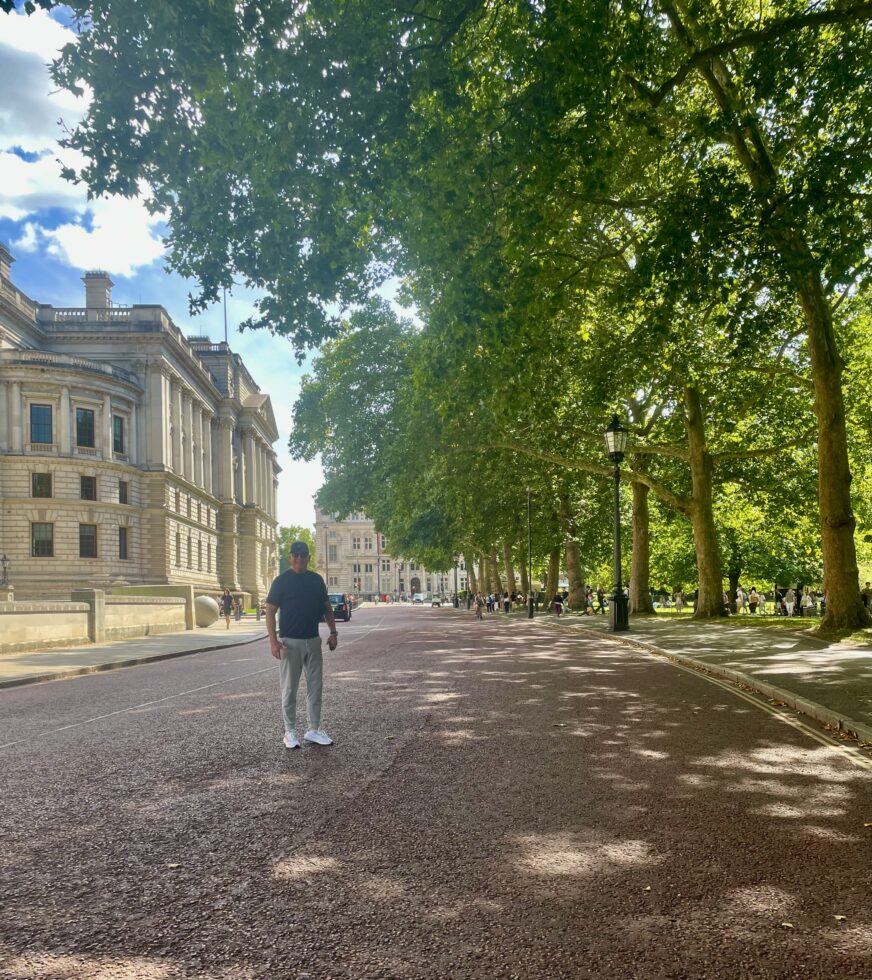
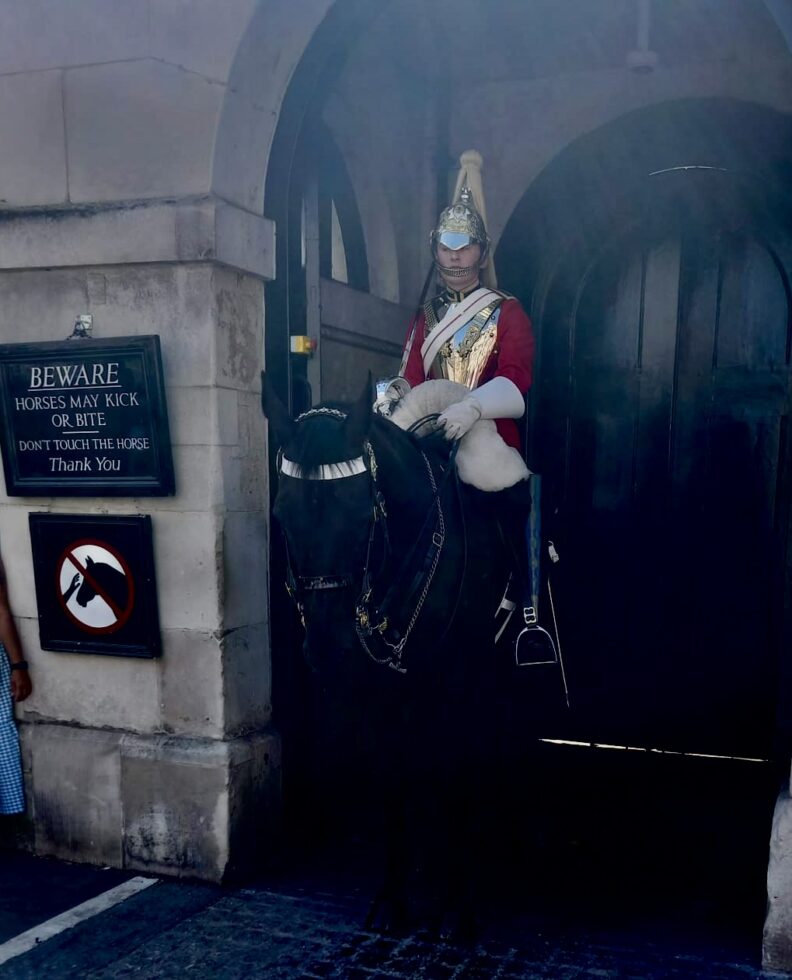
Onto Birdcage Walk to Horse Guards Road, we detour to greet the Royal Horse Guards in all their gleaming finery.

Fun Facts – the Birdcage Walk

#1: Originally an enormous cage, Birdcage Walk gets its name from King James I’st royal aviary and menagerie, which once stood alongside St James’s Park. It wasn’t just filled with birds like hawks and falcons — the collection reportedly included camels, crocodiles, and even an elephant.

#2: For over 200 years it was a private royal road – until 1828, only the royal family and the Duke of St. Albans (the Hereditary Grand Falconer) were allowed to drive along Birdcage Walk. Everyone else had to go the long way around!

#3: Part of D-Day was planned at One Birdcage Walk — a building still standing on the street — it was also used for secret planning sessions ahead of the D-Day landings in World War II.

#4: The jet engine was presented here too – soon after the war, Sir Frank Whittle introduced his groundbreaking plans for the jet engine in the Lecture Theatre at One Birdcage Walk.

#5: You’ve probably seen it without realising – Birdcage Walk is part of the route of the London Marathon, and even includes a hidden alley called Cockpit Steps, which appears in the diaries of both Samuel Pepys and John Evelyn.

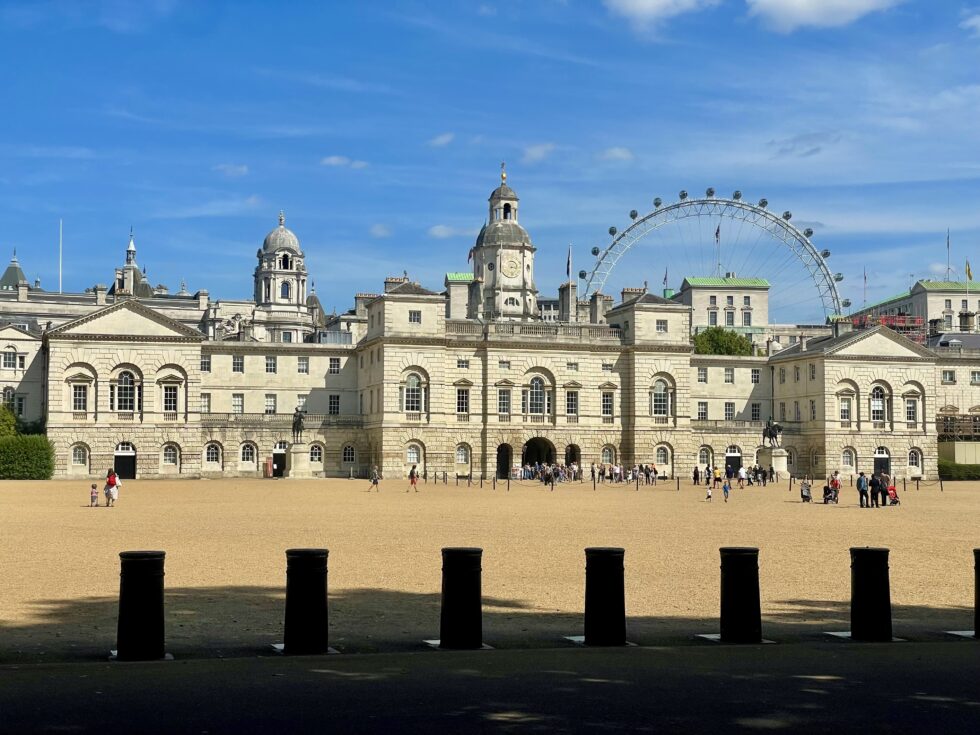
Fun Facts – the Horse Guards

#1. A royal execution is literally marked on the clock – there’s a little black mark on the clock overlooking Horse Guards Parade marking 2:00 pm, the exact moment King Charles I was executed in 1649. Rather a dramatic reminder don’t you think?

#2. You can personally meet the King’s Life Guard (and their horses!) – between 10 am and 4 pm daily, they mount up in full ceremonial gear — gleaming helmets, breastplates, immaculately brushed horses — and perform a timeless ritual right in the middle of modern London. The horses don’t mind their photo being taken and also don’t mind taking a nip if you get too close. It’s must have been 50 degrees inside the guards outfits today! 


Finally, an amble along Whitehall, sneaking a peek through the gates of No. 10 Downing Street before heading to a respectable ale house for a well-deserved G&T and a toss up between Sunday roast with Yorkshire pudding or a light summer salad. The yorky pudding won. A lazy day by London standards — but for us, a perfect blend of ceremony, gardens, and a gentle loop through history.

1 2 3 4