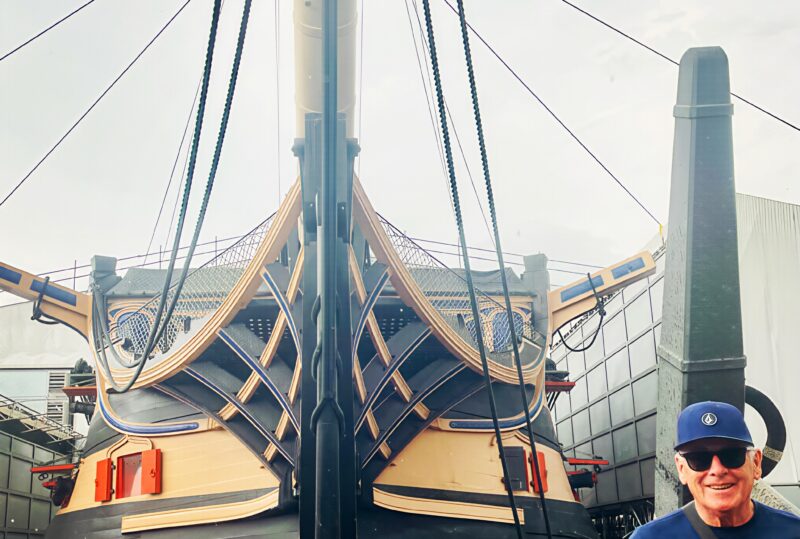
Portsmouth

Epilogue: One Wild and Precious Life: The UK Chronicles

Our wild & wonderful UK wanderings…

Hello, lovely readers!

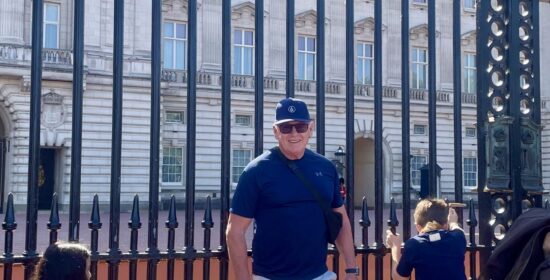
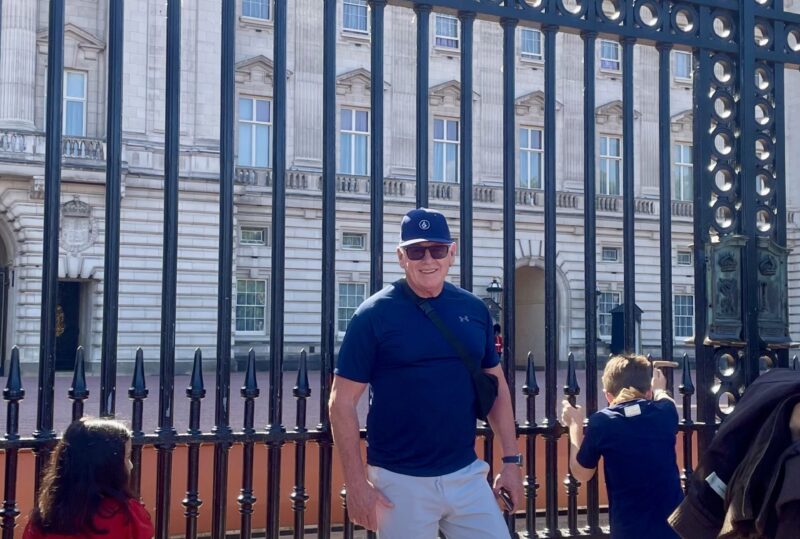
The big G (he’s the tall one), travel buddy Ian (he’s the short one) and me

And just like that, our grand romp across the UK comes to a close – a tapestry of misty mornings, midnight ceremonies, pastel streets, castles perched on volcanoes, and more belly laughs than we ever expected.

From Westminster’s sunlit grandeur to Windsor’s royal sparkle…

From punting mishaps on the Cam to ghost tales in York…

From scarlet-coated storytellers to Ted Lasso pep talks in Richmond…

From Viking digs to volcanic heights…

From art that stirred the soul to history that tugged the heart…

Every chapter gave us something: a moment, a memory, a quote, a giggle, a pint, a surprise, a story to retell later with dramatic embellishment (as is our right).

And woven through it all was the simple truth we keep circling back to – that this is what we choose to do with our one wild and precious life. To explore. To wonder. To laugh. To feel history beneath our feet and possibility in our pockets. To spend time with people we adore, in places that ignite something inside us.

So here’s to the UK – for its charm, its chaos, its courage, its characters…and for reminding us that adventure doesn’t need to be perfect to be extraordinary.

It’s not a ‘selfie’ if there’s more than one in it, ok?

Until the next journey, lovely readers.

Bags at the ready. Hearts wide open.

More stories await.

Dive into our chapters with a lazy scroll through
  • London’s Blinged-up Beating Heart – Westminster – where the Houses of Parliament compete with Big Ben’s brand new bling
  • Cannons, Captains & Clever Engineering – Portsmouth – three warships that rewrote history in wood, sail and steel
  • Scarlet Coats & Sparkling Stories – meeting the Chelsea Pensioners over a well-earned G&T
  • Lions, Lamp Posts and London Legends – Trafalgar Square – where Nelson keeps watch, lions have cat paws and lamp posts moonlight as police stations.
  • Brains, Bridges & a Bed to Die For – Cambridge – from King’s College Chapel to a punt gone wrong
  • When Monuments Speak – what London’s memorials whisper if you pause long enough to listen
  • Britain’s Family Album – The Portrait Gallery – from Shakespeare to Bowie
  • Dreams, Breaths & Blue Light – Somerset House’s luminous lady invites us to pause and imagine.
  • Keys, Lanterns & Late Night Rituals – The Tower of London’s nightly Ceremony of the Keys.
  • Pints, Punts and Plenty of Ghosts – York – a weekend in the UK’s most haunted (and most pub-filled) city.
  • Pints, Pubs and Pub Runs – From Ted Lasso’s ‘Believe’ to a mad dash along the Thames
  • A city of Stories, a Castle of Secrets – Edinburgh – witches, wars, and a sneaky spy hole in Britain’s most besieged fortress.
  • Crowns, Clocks and Cozy Cafes – Windsor – from bling and butter pats to one poor chap lighting 300 fires – Windsor Castle at its royal best.
  • Pastel Homes and Aussie Hospitality – Notting Hill – where the pubs are bright, the Aussie service fantastic and every street’s ready for a close-up.

And a barrel of thanks…

And! A barrel of thanks and gratitude to our fabulous hosts, Adrian and Christine. There to greet us as we popped out from the tube at Westminster, there for that very last pint at Notting Hill, you were our guides, chauffeurs, planners, and partners in mischief.

You gave us the best of London – from surprise French cannon bollards (the last ones standing!) to VIP Tower of London key handovers, from drinks on Thames-anchored ships to Richmond river cruises, a peek inside the Australian Embassy, and even the secret tip for Horizon 22 – the city’s best complimentary view.

Add in perfect pub roasts, route-planning apps and endless laughter over a Charcuterie board at the end of a long day, and you made our trip extraordinary.

Thank you, dream team! Our door is always open when you next land in Oz.

So lovely, readers… grab your bevvy of choice, kick back, indulge in a spot of escapism, and feel free to share your own fun stories and recommendations in the comments!

Cannons, Captains & Clever Engineering

Portsmouth’s three warships that rewrote history in wood, sail, and steel.

Hello lovely readers,

If ever there was a place to step back through Britain’s naval story, it’s Portsmouth Historic Dockyard. Three ships — the Mary Rose, HMS Victory, and HMS Warrior — sit here side by side, spanning three centuries of courage, chaos, and clever engineering. They’re not just museum pieces, but living, breathing storytellers of the sea.

The Mary Rose

Built in 1510 and lost in 1545 defending England from the French, Henry VIII’s beloved Mary Rose lay silent beneath the Solent for over 400 years before being rediscovered in 1971. In 1982, the world held its breath as she rose from the water — a ghost ship brought back to life. Today she rests in her own gallery, reunited with thousands of artefacts that tell the tale of Tudor sailors who lived, worked, and perished aboard. Step inside and it’s not just timber and wax; it’s a time capsule of Tudor England, a story saved by science and saltwater grit.

Among the most touching finds: Hatch, the ship’s dog — discovered near the carpenter’s cabin and named after the hatch door under which he was found. Just 18–24 months old, Hatch was kept aboard as a ratter, chasing vermin below decks. Standing in the museum, looking at his delicate little skeleton, I was struck by how human the story suddenly became. It wasn’t just cannonballs and kings — it was the small companions who padded the decks, sharing the same fate as the men they lived alongside.

The Mary Rose remnants
Relics from the Mary Rose

HMS Victory

Then there’s Nelson’s HMS Victory, Trafalgar’s most famous warship and a floating fortress bristling with 104 guns. Hard to picture now, but 820 men once crammed into her decks, eating, sleeping, and working in stale air and hammocks strung where they could. As you wander her timbers, you trace the battle itself — punishments for unruly sailors, the horrors of Georgian battlefield medicine, and the very spots where history shifted.

One detail chills the most: the glint of a gold button on Nelson’s coat, catching the sun and a French sniper’s eye, changing the course of a battle and a life. That button survives, as does the bullet on display at Windsor Castle — two tiny objects that changed the course of history. On the Quarter Deck you’ll find a plaque marking where he fell, and deep below, a solitary lamp marks the Orlop deck where he died three hours later. Standing there, it wasn’t the thunder of cannons that stayed with me — it was the quiet weight of one shining button.

The Victory
Necessities on board the Victory
Nelson’s deathbed
The Victory

HMS Warrior

Fast forward to 1860, and the Victorians brought swagger to the seas with HMS Warrior, the world’s first iron-hulled, armoured warship. Larger, faster, and tougher than anything afloat, Warrior was a marvel of engineering — part battleship, part floating power statement. She never fired a shot in anger, but she didn’t need to; her iron presence alone made rivals rethink their fleets.

Walking her decks today, you glimpse both the bravado of Victorian innovation and the human side of service life — hammocks strung shoulder-to-shoulder, officers’ cabins with little comforts of home, and cavernous engine rooms where stokers once worked in furnace heat, shovelling coal in endless shifts. Those unsung men, sweating in the bowels of the ship, were the real heartbeat of Britain’s iron giant.

The Warrier
Below deck The Warrier

Three Ships, Big Battles & Small Lives

What struck me most about Portsmouth’s three warships wasn’t just their size or their role in history — it was the little, human details that quietly tugged at the heart. On the Mary Rose, it was Hatch, the young ship’s dog, curled forever near the carpenter’s cabin, reminding us that even Tudor sailors needed a loyal companion. On Victory, it was the glint of Nelson’s gold button, catching the sun and a sniper’s eye, changing the course of a battle and a life. And on Warrior, it was the invisible heat of the stokehold, where coal dust and sweat powered Britain’s iron giant — the unsung heroes never carved in marble.

Side by side, these ships tell the story of Britain’s naval might, but more than that, they whisper of the people (and pups!) who lived, fought, worked, and sometimes died aboard them. History isn’t just cannons, captains, and clever engineering — it’s the lives, big and small, that made them unforgettable.